
To publish multiple academic books with one publisher, a researcher needs an imprint for every subject and no fees that multiply with each title. Dr Sarraj works in two genres: language and education didactics, and historical or political essays.
All his titles are non-fiction books: academic studies matched to the OmniScriptum imprint that fits their subject and language.
He writes about subjects that are rarely examined, so that the people involved are not forgotten.
Who is Dr Jamel Ben Hechemi Sarraj?
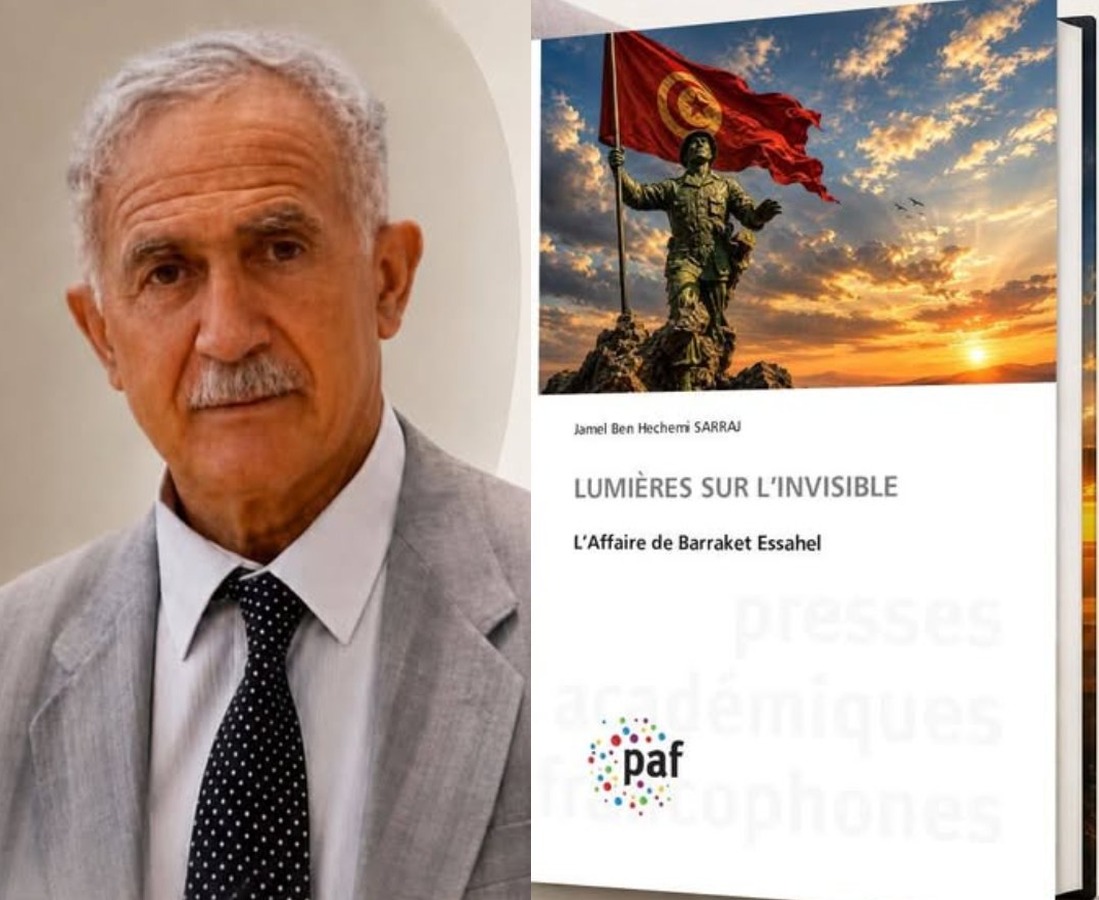
Dr Jamel Ben Hechemi Sarraj is a lecturer (maître de conférences) and a researcher at DILTEC, the research unit for language, text and culture didactics at Université Sorbonne Nouvelle (formerly Université Paris III).
He holds a doctorate from Université Sorbonne Nouvelle. He also works as an expert for the Council of Europe on the ILMA project.
Dr Sarraj is the author of about twenty works and academic studies.
In his words, "My journey has built over the years between teaching, research and writing."
A few of his other books published with OmniScriptum
Why does he write about sensitive and overlooked topics?
Dr Sarraj deliberately chooses subjects that other researchers avoid or have not yet studied.
His aim is to question accepted accounts and open new perspectives. In his words, "I like to go where topics are sometimes sensitive or not explored."
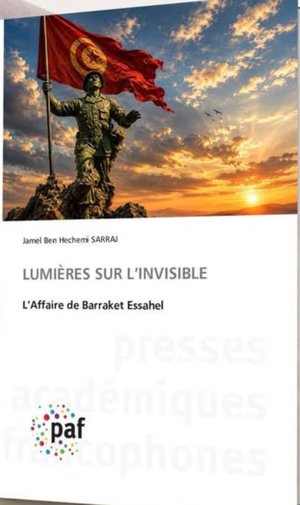
A book about Tunisia history: what is Lumières sur l’invisible : L’Affaire de Barraket Essahel about?
Lumières sur l’invisible : L’Affaire de Barraket Essahel (Light on the Invisible: The Barraket Essahel Affair) returns to one of the least-discussed episodes in modern Tunisian history. The title states the book’s aim: to bring a hidden case into public view. The book covers one specific era: the 1991 affair itself, through the soldiers’ rehabilitation after the 2011 revolution.
What was the Barraket Essahel affair?
The Barraket Essahel affair was a 1991 case in which the Ben Ali regime in Tunisia falsely accused 244 members of the armed forces of plotting a coup.
The authorities claimed the group had met in the village of Barraket Essahel, near Hammamet. The soldiers were arrested, 93 received prison sentences, and all were dismissed from the army.
After the 2011 revolution, the former soldiers were officially recognised as victims and rehabilitated. Lumières sur l’invisible revisits the case for French-speaking readers.
"My writings seek to open up different perspectives, question, and give voice to often forgotten or overlooked realities."
Key facts
| Imprint | Presses Académiques Francophones (PAF), an imprint of OmniScriptum Publishing Group |
|---|---|
| Language | French |
| ISBN | 978-6630052442 |
| Format | Paperback, print-on-demand |
| Copyright | The author, alongside OmniScriptum’s publishing rights for this edition |
| Where to buy | Morebooks (OmniScriptum online bookstore), and other international retailers as the print-on-demand title becomes listed there |
What is it like to publish an academic book with OmniScriptum?
It is a very positive experience, marked by professional and human support. I particularly appreciated the quality of the exchange and support throughout the process with Omniscriptum, especially with Madam Frunza and Mr. El Hajji.
OmniScriptum publishes eligible manuscripts with no upfront publishing fees. Authors keep copyright over their work and earn royalties on eligible sales, alongside OmniScriptum’s publishing rights for the edition.
Why Presses Académiques Francophones?
From manuscript to published book: the timeline
- 1Manuscript submitted to Presses Académiques Francophones
- 2Reviewed and accepted by the editorial team
- 3Prepared for print and ISBN assigned
- 4Published and sold worldwide
What is the hardest part of writing about an overlooked subject?
The hardest part of writing about an overlooked subject is building a careful, well-checked account of events that received little attention for years.
For Dr Sarraj, the answer is patience. He sees time, discipline and consistency as what gives research its value.
"Ideas gain value with time, rigor and consistency."
What advice does he give first-time authors?
"I would tell them to stay curious, not to be afraid to explore different paths, and most of all to persevere."
- 1If your topic is little studied, treat that as a reason to write, because a book can become the first full account readers find.
- 2If your research is in French, publish it in French, so it reaches the readers closest to the subject.
- 3If you have more than one research interest, explore them, because different paths can feed one body of work.